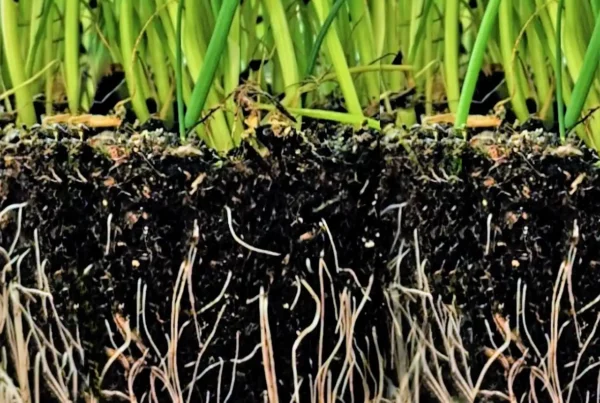
Image by Gundula Vogel from Pixabay
Developmental pathways in plants: Lessons from Arabidopsis for crop innovation  Publications
January 27, 2026

Developmental pathways in plants: Lessons from Arabidopsis for crop innovation 

Malcolm J Bennett, Rahul Bhosale, Scott A Boden, Shu-Yan Chen, Tino Colombi, Toshiro Ito, Hong-Ju Li, Poonam Mehra, Lars Østergaard, Meng Li, Liu Liu, Nana Otsuka, Bipin K Pandey, Scott Poethig, Kalika Prasad, Yue Qu, Makoto Shirakawa, Ying Hua Su, Cao Xu, Wei-Cai Yang, Wen Jie Zhang, Xiaolan Zhang, Xian…
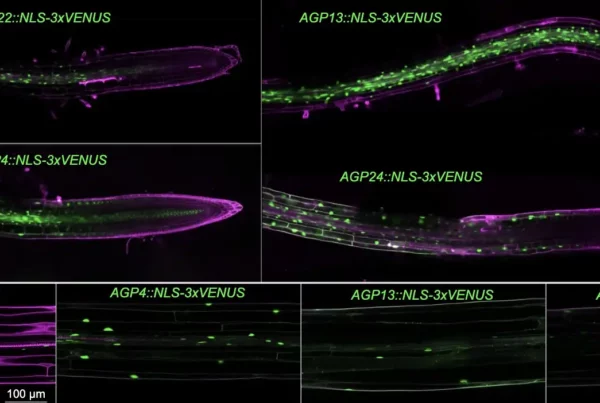
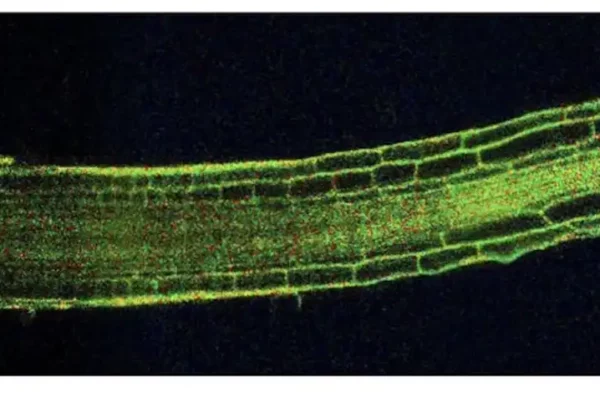
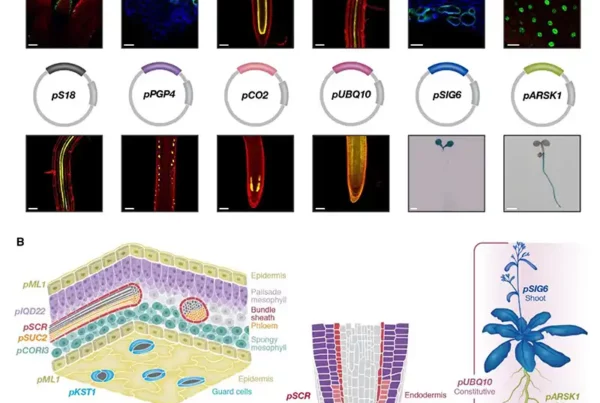
Image: Description and validation of pMDS plasmid system for dual analysis of transcription and translation in plants. (A) Organization of pMDS1 vector showing reporters for transcription [mTurquoise (mTurQ)], translation (C-terminal mVenus), and a 2A self-cleaving peptide. (B) Organization of pMDS2 vector showing reporters for transcription (mTurQ), translation (N-terminal mVenus), and a 2A self-cleaving peptide. (C) Confocal image of pMDS1_SHRpro:SHR:mVenus:mTurQ showing gene expression (mTurQ) in the stele region and protein (mVenus) translocating to endodermis in the root meristem. (D) Confocal image of pMDS2_VAM3pro:mVenus:VAM3:mTurQ showing subcellular expression (mTurQ) in the nucleus and protein (mVenus) moving to the vacuole in the root epidermis. Red channel shows mCherry expression. nu, nucleus; vac, vacuole; *, endodermis of root meristem. Scale bar, 10 μM. Credit: Science Advances
Elucidating tissue and subcellular specificity of the entire SUMO network reveals how stress responses are fine-tuned in a eukaryote Publications
January 21, 2026

Elucidating tissue and subcellular specificity of the entire SUMO network reveals how stress responses are fine-tuned in a eukaryote

Jason Banda et al. Elucidating tissue and subcellular specificity of the entire SUMO network reveals how stress responses are fine-tuned in a eukaryote Science Advances 11,eadw9153(2025). DOI:10.1126/sciadv.adw9153
mTACT: A cell type-specific transportome-scale amiRNA toolbox to overcome functional redundancy in Arabidopsis  Publications
January 20, 2026

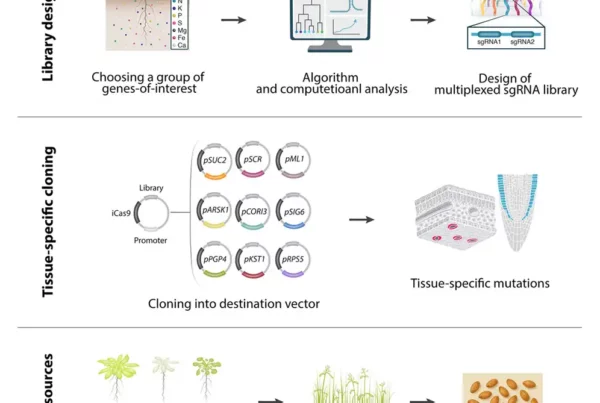
mTACT: A cell type-specific transportome-scale amiRNA toolbox to overcome functional redundancy in Arabidopsis 

Moran Anfang, Shir Ben Yaakov, Ning Su, Anat Shafir, Jenia Binenbaum, Reem Haj Yahya, Xikai Yu, Carl Procko, Hamtual Bar, Joanne Chory, Julian I Schroeder, Yosef Fichman, Itay Mayrose, Eilon Shani, Yuqin Zhang, mTACT: A cell type-specific transportome-scale amiRNA toolbox to overcome functional redundancy in Arabidopsis, Plant Physiology, 2025;, kiaf682, https://doi.org/10.1093/plphys/kiaf682
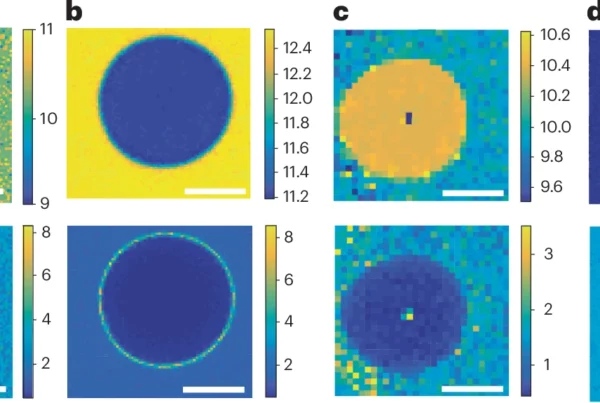
Dynamic interactions at the root–soil interface.(e) high-resolution X-ray computed tomography images reveal how plant roots impact the structural development of the rhizosphere by causing changes in soil pore thickness over time. Panel e adapted from Reference 48 (CC BY 4.0).
Root Growth and Development in “Real Life”: Advances and Challenges in Studying Root–Environment Interactions Publications
March 20, 2025

Root Growth and Development in “Real Life”: Advances and Challenges in Studying Root–Environment Interactions

Mehra, P., Banda, J., Ogorek, L. L. P., Fusi, R., Castrillo, G., Colombi, T., ... & Bennett, M. J. (2025). Root Growth and Development in “Real Life”: Advances and Challenges in Studying Root–Environment Interactions. Annual Review of Plant Biology, 76. https://doi.org/10.1146/annurev-arplant-083123-074506
Fig. 1. Hydropatterning responses revealed in public sector breeding lines of Zea mays (maize)
Moisture-responsive root-branching pathways identified in diverse maize breeding germplasm Publications
February 24, 2025

Moisture-responsive root-branching pathways identified in diverse maize breeding germplasm

Scharwies, J. D., Clarke, T., Zheng, Z., Dinneny, A., Birkeland, S., Veltman, M. A., … & Dinneny, J. R. (2025). Moisture-responsive root-branching pathways identified in diverse maize breeding germplasm. Science, 387(6734), 666-673. https://www.science.org/doi/abs/10.1126/science.ads5999 .
Roots employ several classes of hormones including rhizocrine signals that spend time outside of plant tissues in the rhizosphere. A schematic diagram illustrating (A) a longitudinal cross-section of a root growing in soil, and (D–E) examples of the contrasting modes of action for different hormone classes (denoted as yellow circles) involving (D) endocrine signalling (i.e. acting in other organs after long-distance transport), and (E) rhizocrine signalling, where this class of hormone moves outside its root source via the soil (denoted by the blue arrow), returning to the root in response to a soil stress (denoted by the red arrow), triggering an adaptive response, denoted by the green arrow and receptor binding of the hormone signal.
Root RADAR: how ‘rhizocrine’signals allow roots to detect and respond to their soil environment and stresses Publications
December 31, 2024

Root RADAR: how ‘rhizocrine’signals allow roots to detect and respond to their soil environment and stresses

Pandey, B. K., George, T. S., Cooper, H. V., Sturrock, C. J., Bennett, T., & Bennett, M. J. (2024). Root RADAR: how ‘rhizocrine’signals allow roots to detect and respond to their soil environment and stresses. Journal of Experimental Botany, erae490. https://doi.org/10.1093/jxb/erae490