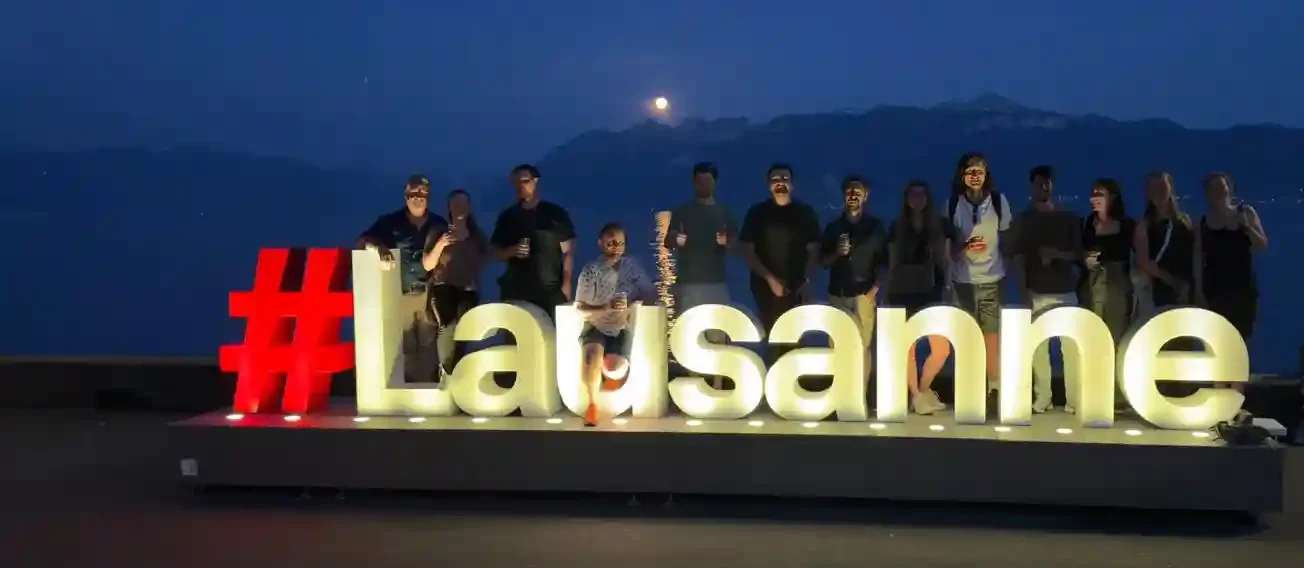
Late May took our whole ERC Hydrosensing consortium to the University of Lausanne for two days that turned out to be equal parts intense science and genuine team building. Coming straight off the Gordon Research Conference (GRC) on water and salt stress in plants, people arrived a little travel-worn but quickly warmed up, and by the end of the weekend, it felt less like a project review and more like a reunion of a group that has grown into a real community.
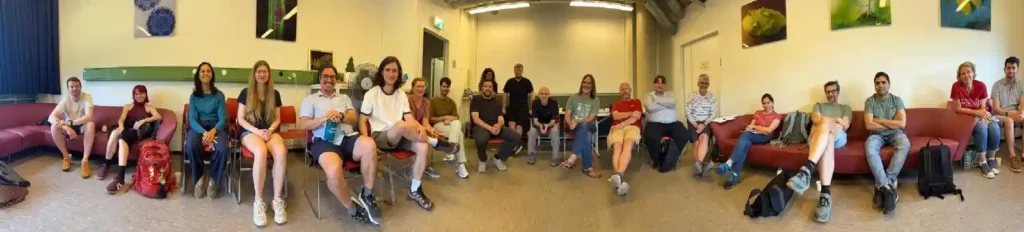
Day One: Where the project stands
Niko Geldner welcomed everyone over lunch on Friday, and Christine Ziegler, one of our beloved Hydrosensing PIs, set the tone with an overview talk titled “Two Years In: The Evolving Hydrosensing Mechanism“. It was a useful reminder of how much our shared picture of water-stress sensing has shifted since the project began and provided a useful frame for everything that followed.
The afternoon dug into the emerging mechanisms that are starting to define our work: Key hydrosensing proteins from the Tel Aviv group, cell wall–mediated osmosensing from NTNU, novel mechanosensors from Nottingham, and the ABA xerometabolome from Regensburg. Each talk built on Christine Ziegler‘s overview and showed how the individual threads are beginning to click together and contribute to the overall success of the project.
After coffee, every staff member and student got two minutes and two slides to introduce themselves and their work. It’s a small format, but with a consortium this size it’s one of the most valuable parts of the meeting. Although we meet regularly via Teams and we do already know each other, this in person format ensures that, by the end, we can easily put faces, projects, and names together.
The scientific high point of the day was the keynote from Jose Dinneny (Stanford University) on water-stress sensing, which gave us a broader field perspective and plenty to discuss heading into the evening.
Then it was check-in and dinner, the first proper chance to relax together.
Day Two: Manuscripts, collaborations, and next steps
Saturday was when the work really got concrete. The morning ran through manuscript updates and the experiments behind them, with first authors giving short overviews and the whole team weighing in on key experiments. The afternoon continued with updates on core technologies such as water imaging, time-resolved cryo-EM, and CRISPR activation and new targets, followed by a session aimed at developing ideas for collaborative projects linking the ERC team with the US and Swiss groups.
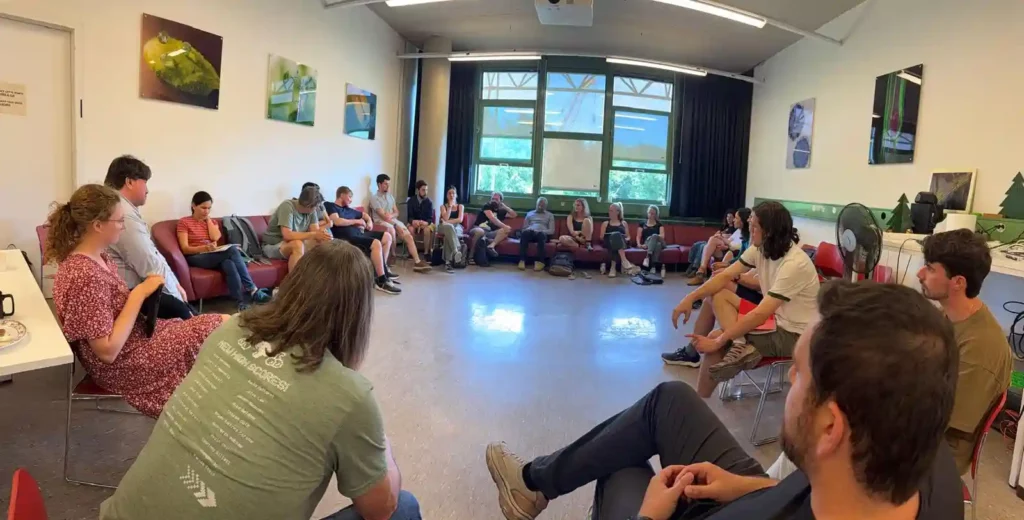
The advisory group (Rishikesh Bhalerao, Priya Ramakrishna, Niko Geldner, and Jose R. Dinneny) met with our postdoctoral research associates and PhDs, followed by discussions in private before providing feedback to all consortium members. Eilon Shani led a frank conversation on improving project management and communication, and Malcolm Bennet guided us through agreeing on next year’s key goals. Rishikesh Bhalerao closed the formal program with feedback from the advisory group, and Thorsten Hamann wrapped up with well-earned thanks to the advisory board, team members and our host Niko Geldner.
The other half of the meeting
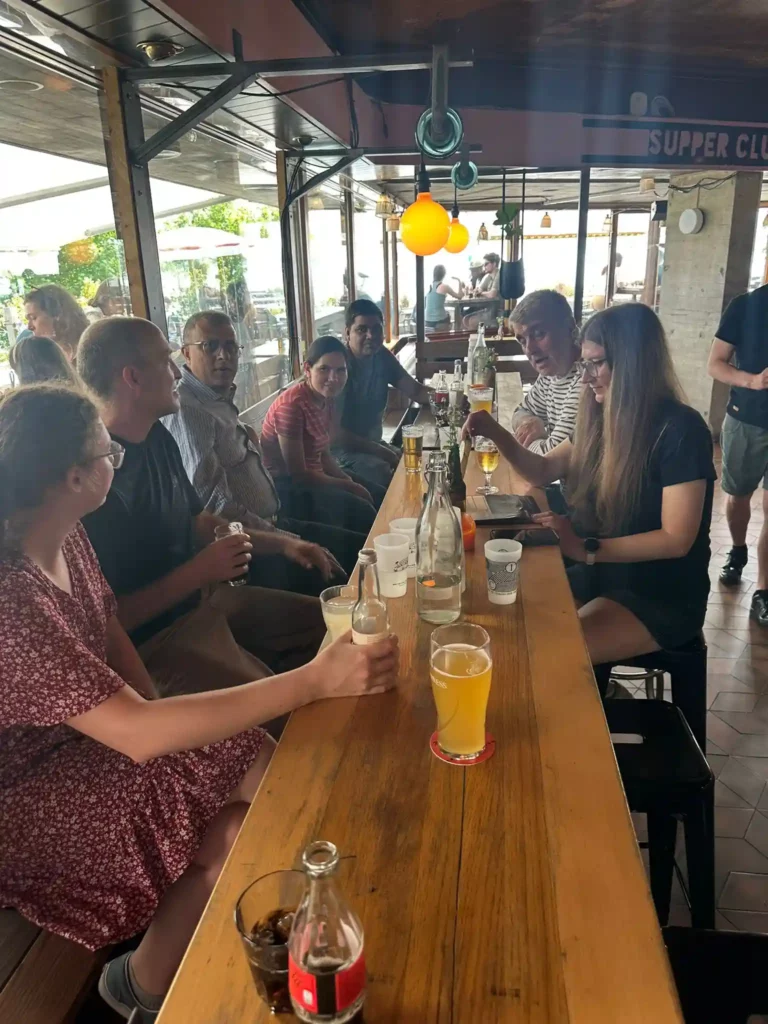
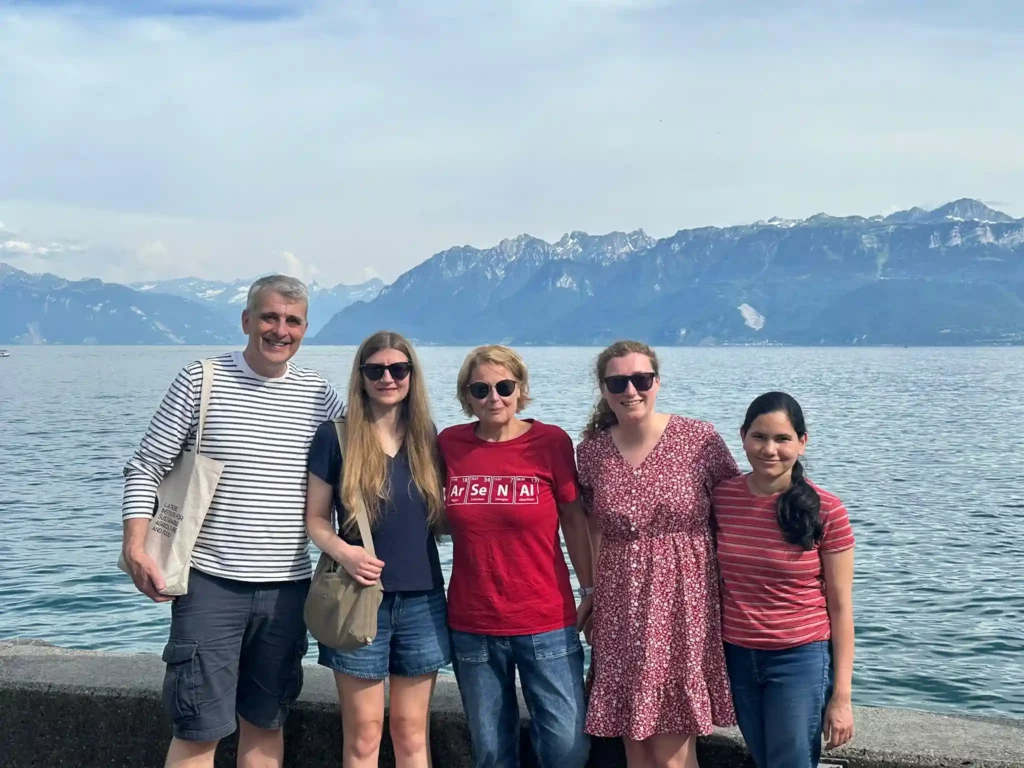
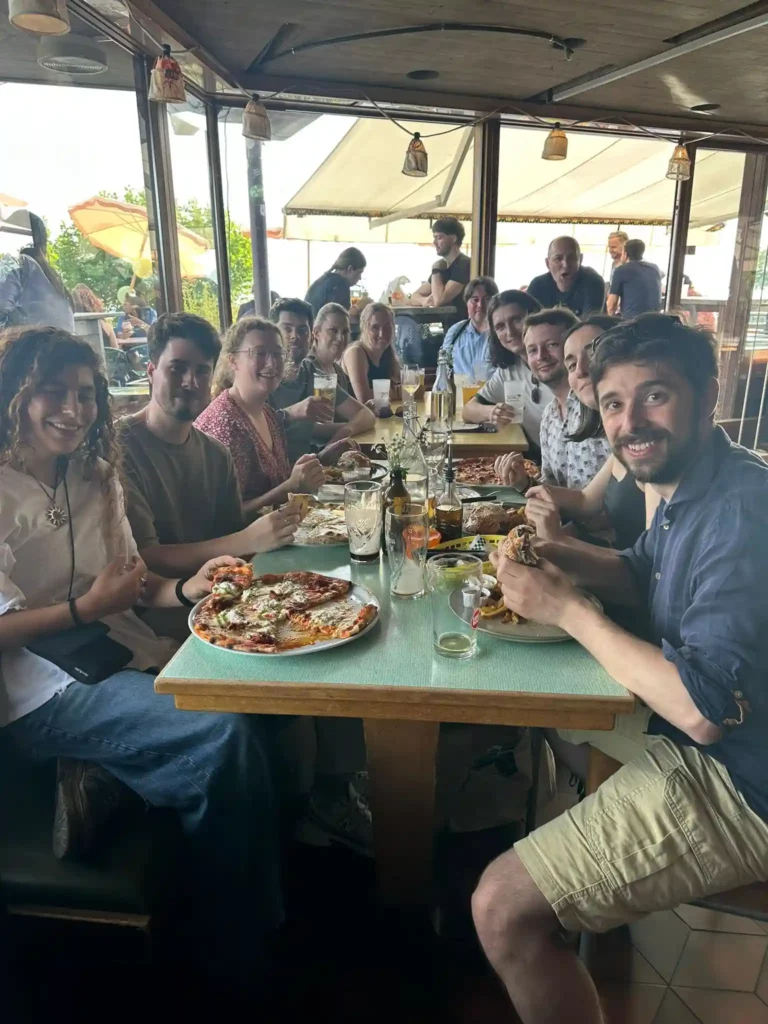
Of course, a consortium meeting isn’t only what happens in the seminar room. Lausanne treated us well, and the time between sessions: wandering past the city’s landmarks, an outing to the local carnival, and more than one round of drinks together is genuinely where a lot of the collaboration gets cemented and novel project ideas developed.
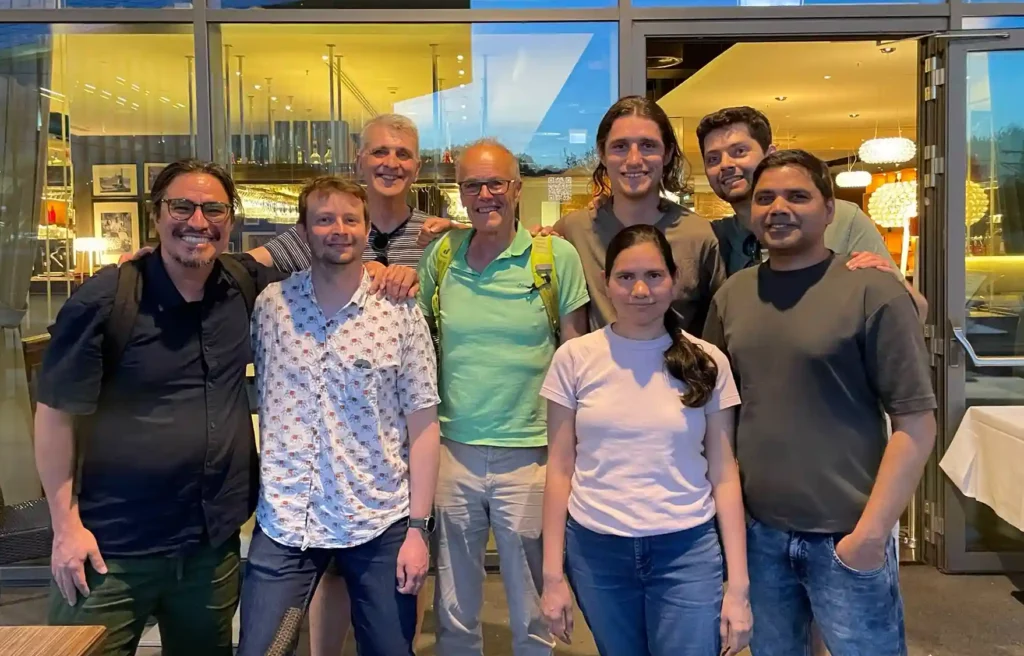
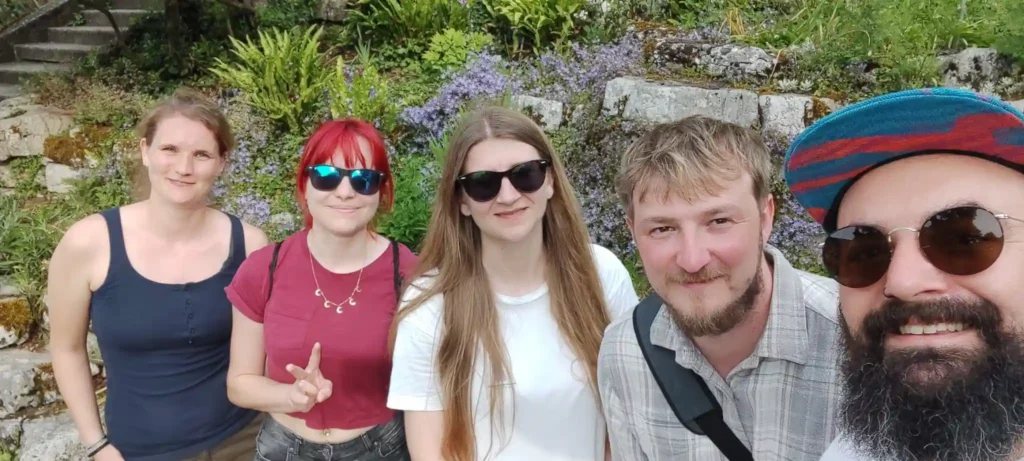
And yes, Saturday’s dinner doubled as preparation for the Champions League final. (Too bad Arsenal lost ☹)
Looking ahead and a special thank you
Two years in, the project feels like it has hit its stride: the mechanisms are sharpening, the manuscripts are taking shape, leading-edge technology is becoming productive, and the team knows each other well enough to be honest and constructive during discussions.
Thank you to the ERC Advisory Group for your time, thoughtful feedback, critical insights, and generous guidance. Your comments were invaluable, and we have carefully captured and will reflect on all of them. We are excited to incorporate your suggestions and strengthen our work as we move forward.
Thanks to the entire Hydrosensing team for creating such an exceptional scientific community. Being part of this team is both a privilege and an inspiration. We leave this meeting energized, motivated, and even more convinced of the impact we can achieve together.
See you all at the next workshop.